PROJECT
From strategy to impact: Full rebranding of Experiencegift scale-up
CONTENT
Context
My role
Core challenge
Design process
Impact and learnings
DESIGN PROCESS
Brand strategy & identity
Wireframes
Multi-brand UI Kit
Design & development
MY ROLE
UX/UI Designer
TIMELINE
3 months
Context
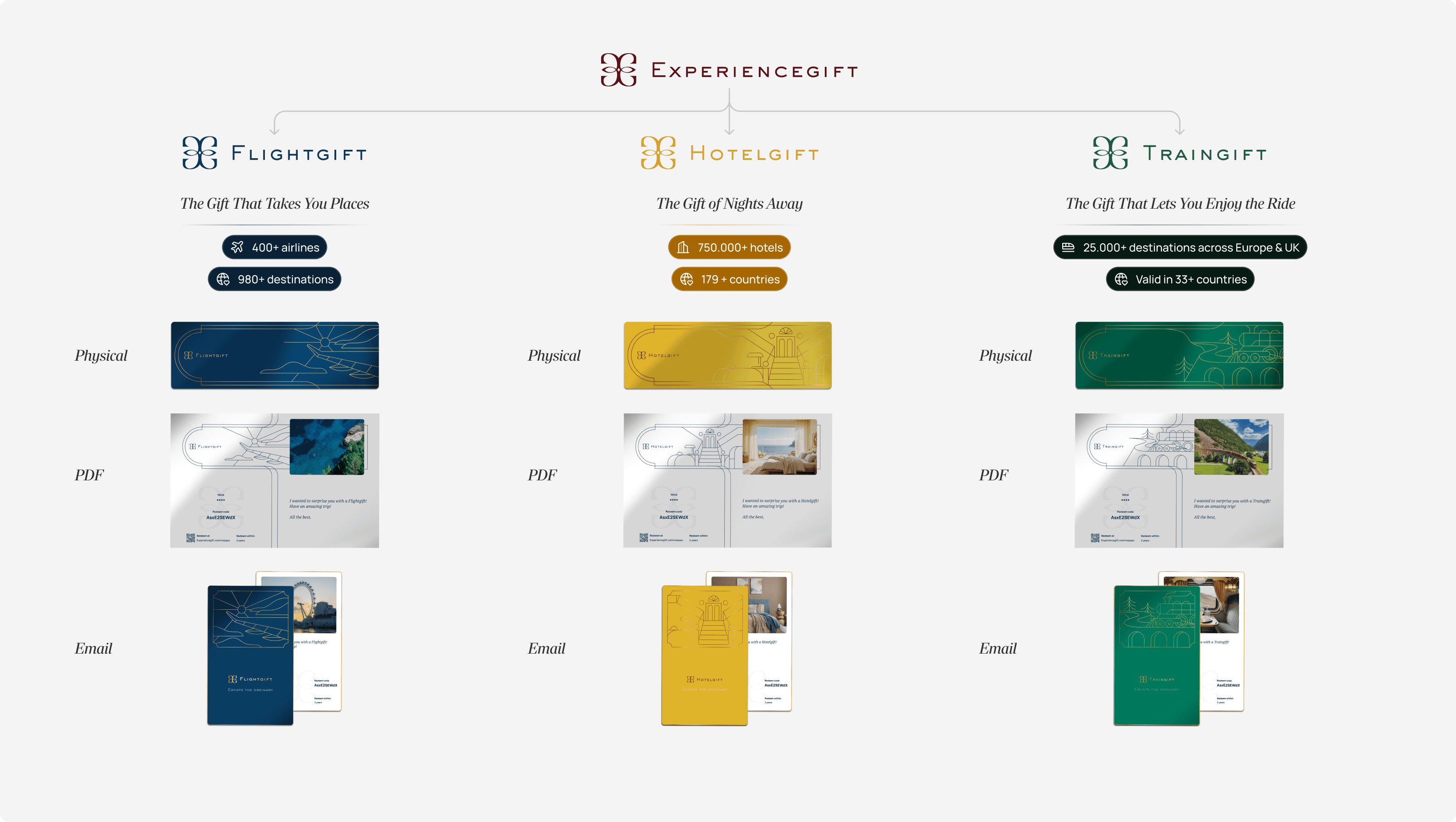
Experiencegift is a global gifting company offering premium gift cards for flights, hotels and trains. After years of rapid growth, the company decided to fully rebrand the parent brand and three sub-brands to create a cohesive and premium identity ahead of the holiday sales peak.
My role
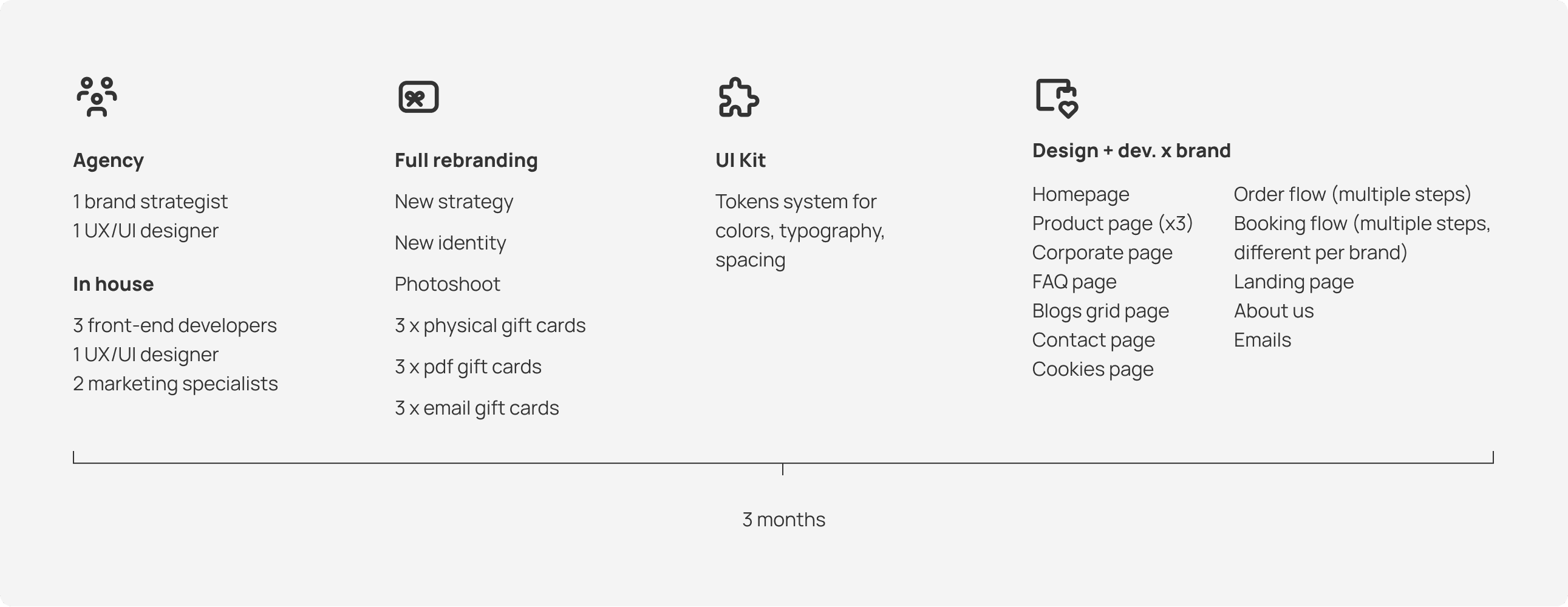
I was the sole in-house designer leading the internal stream of the rebrand. I worked between the external agency, marketing, and development teams to translate the new identity into launch-ready assets and updated websites across multiple brands.
Main responsabilities:
Collaborated closely with the agency in shaping the new brand identity and gift card designs.
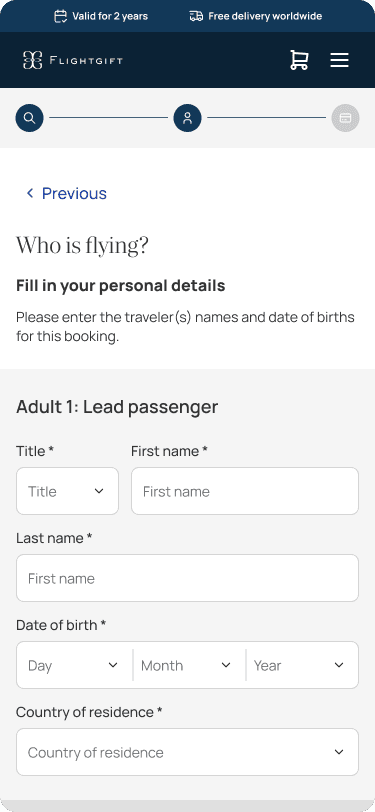
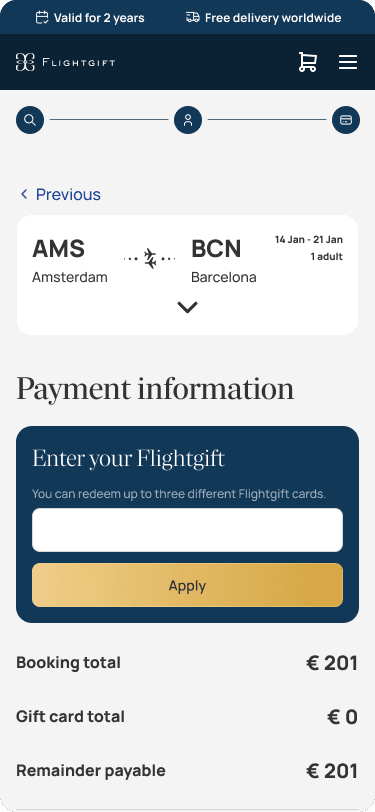
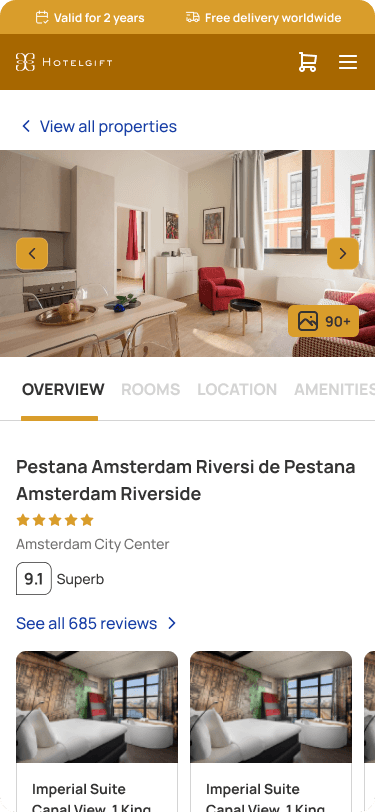
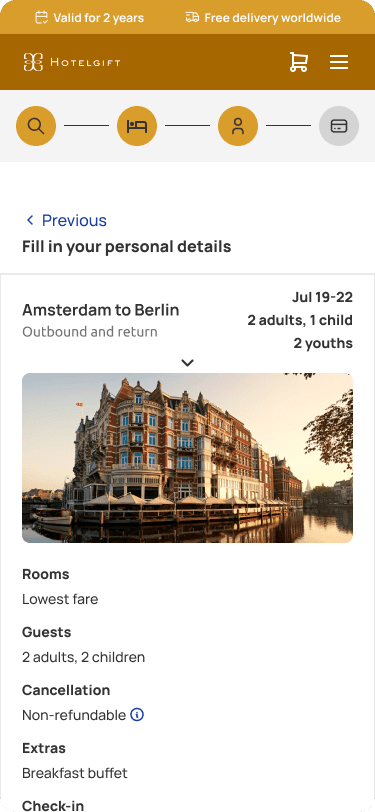
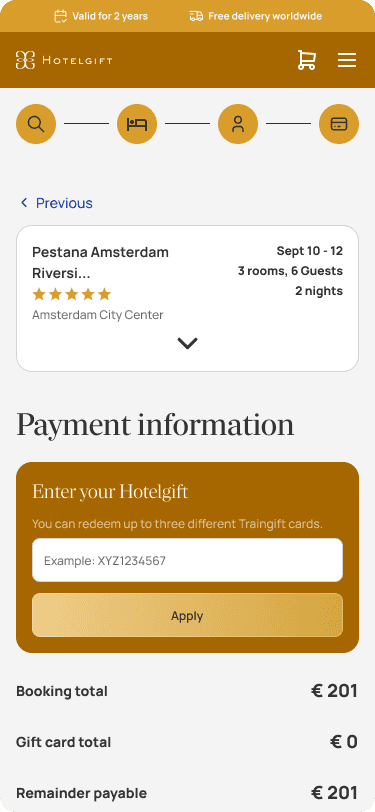
Translated the new visual direction into updated UI and selective UX improvements across all websites.
Coordinated with the agency and guided marketing and development teams through design handoff and implementation.
Core challenge
The rebrand needed to unify multiple brands and websites under a new premium identity.
The company was evolving its brand architecture, aiming to elevate the umbrella brand while the existing sub-brands continued to drive most sales.
The challenge was to create coherence across a large, multi-brand ecosystem and introduce a scalable premium experience, while working within fast-moving decision cycles and business-driven constraints.
Design process
We followed a lean, accelerated process shaped by the tight timeline, existing business insights, and the need to bring a new premium identity to many brands simultaneously.
The approach focused on clarity, rapid alignment, and creating a scalable foundation that could be implemented quickly across multiple touchpoints.
Phase I:
Brand strategy & identity
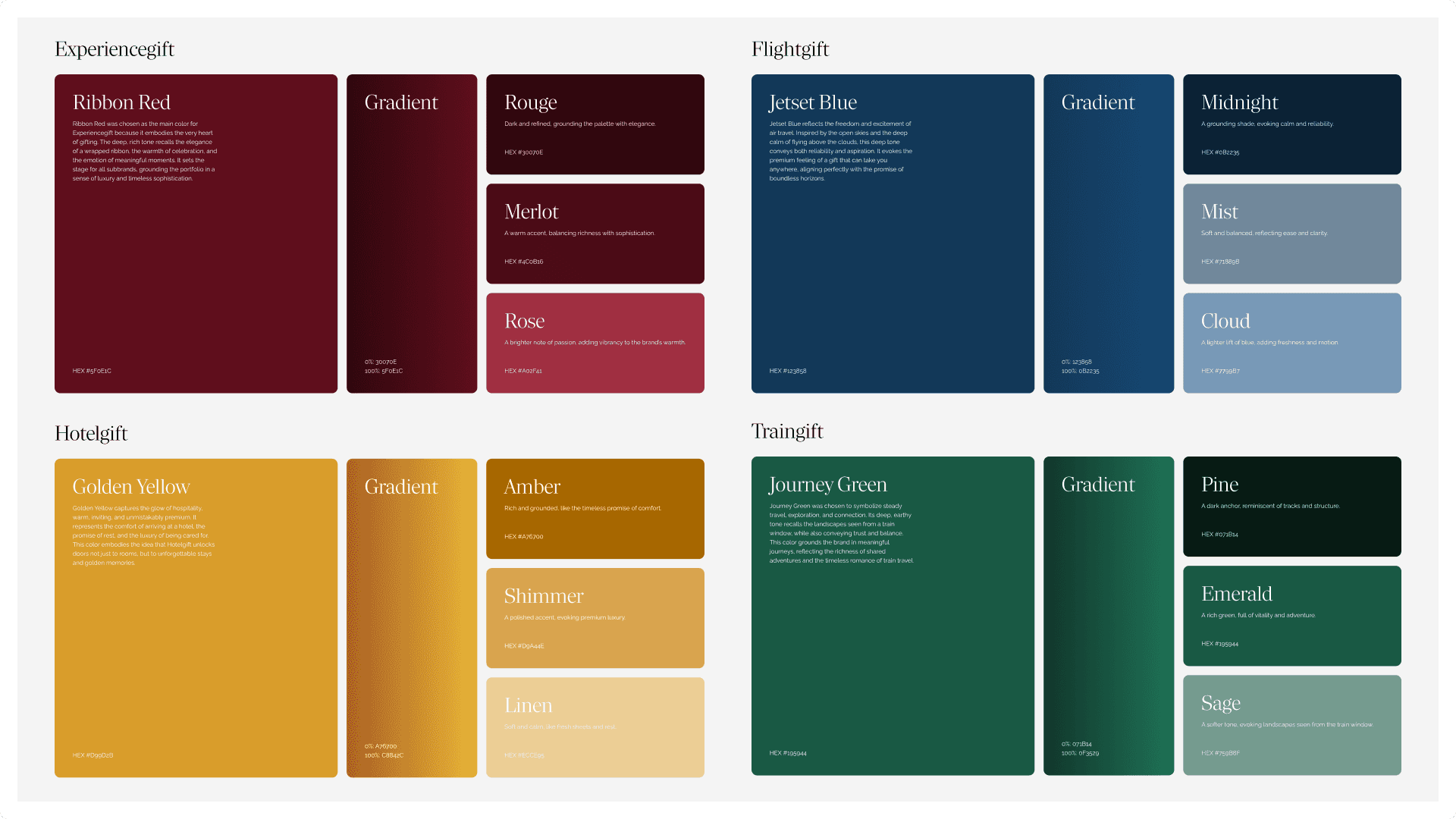
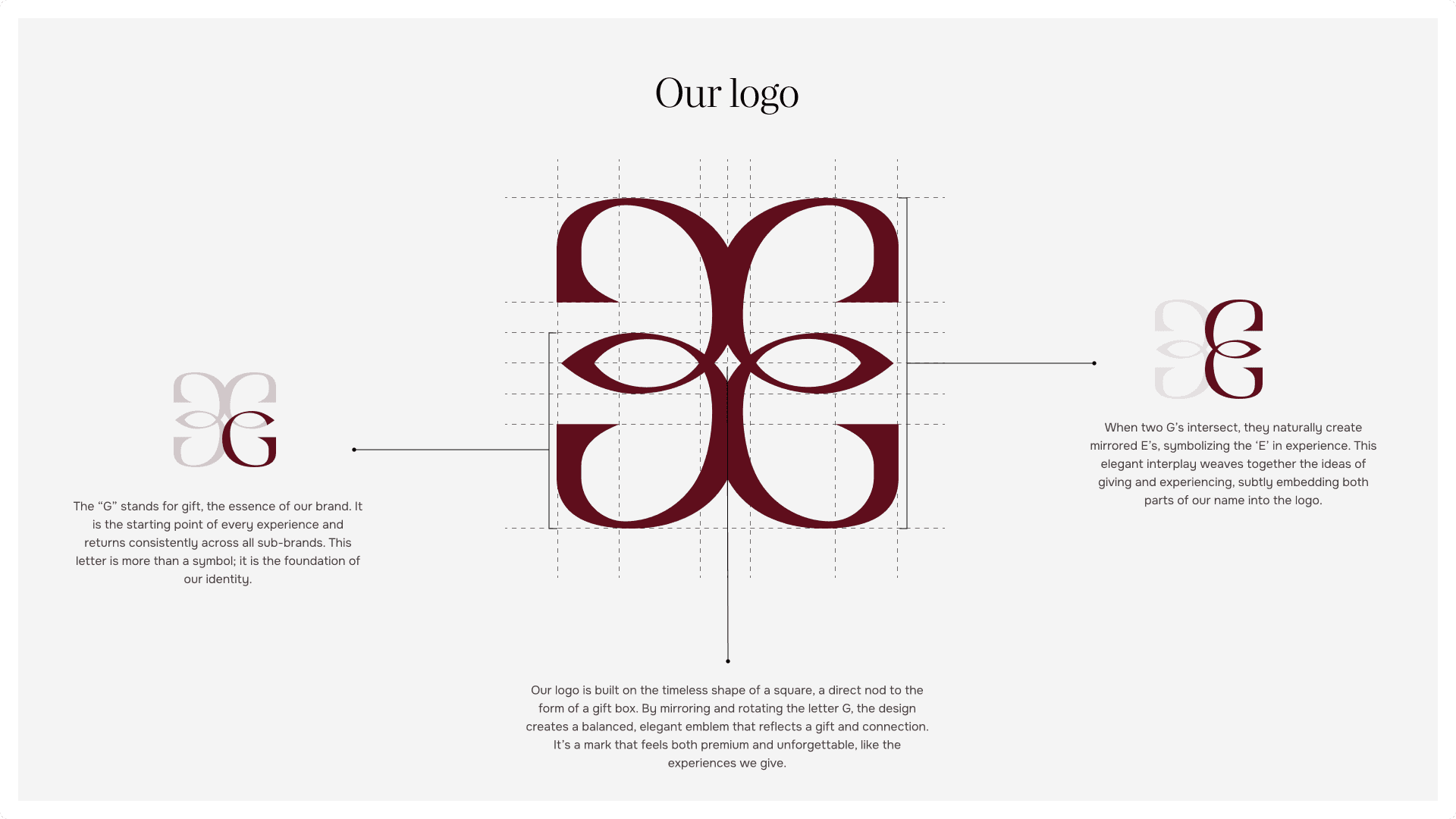
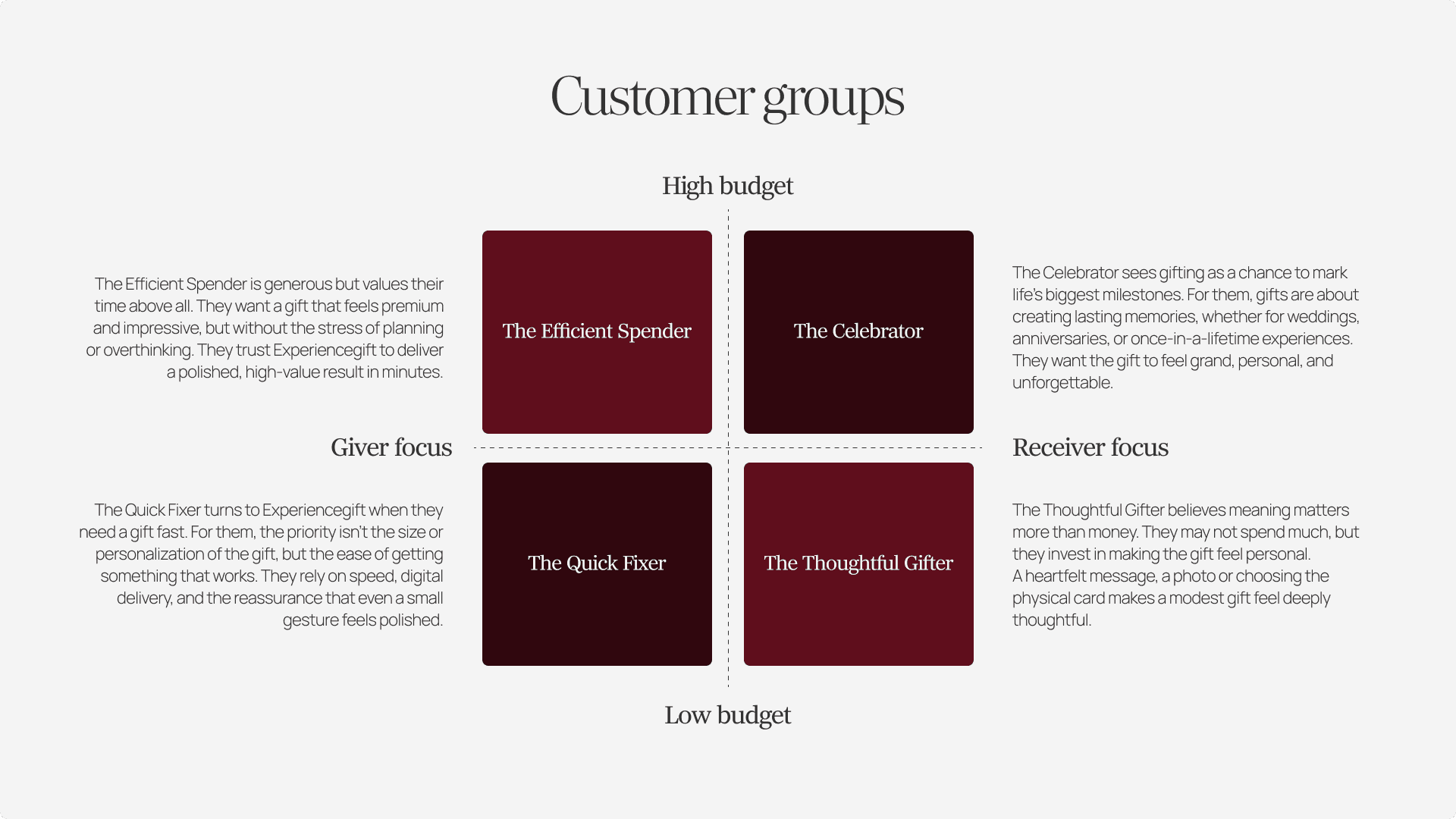
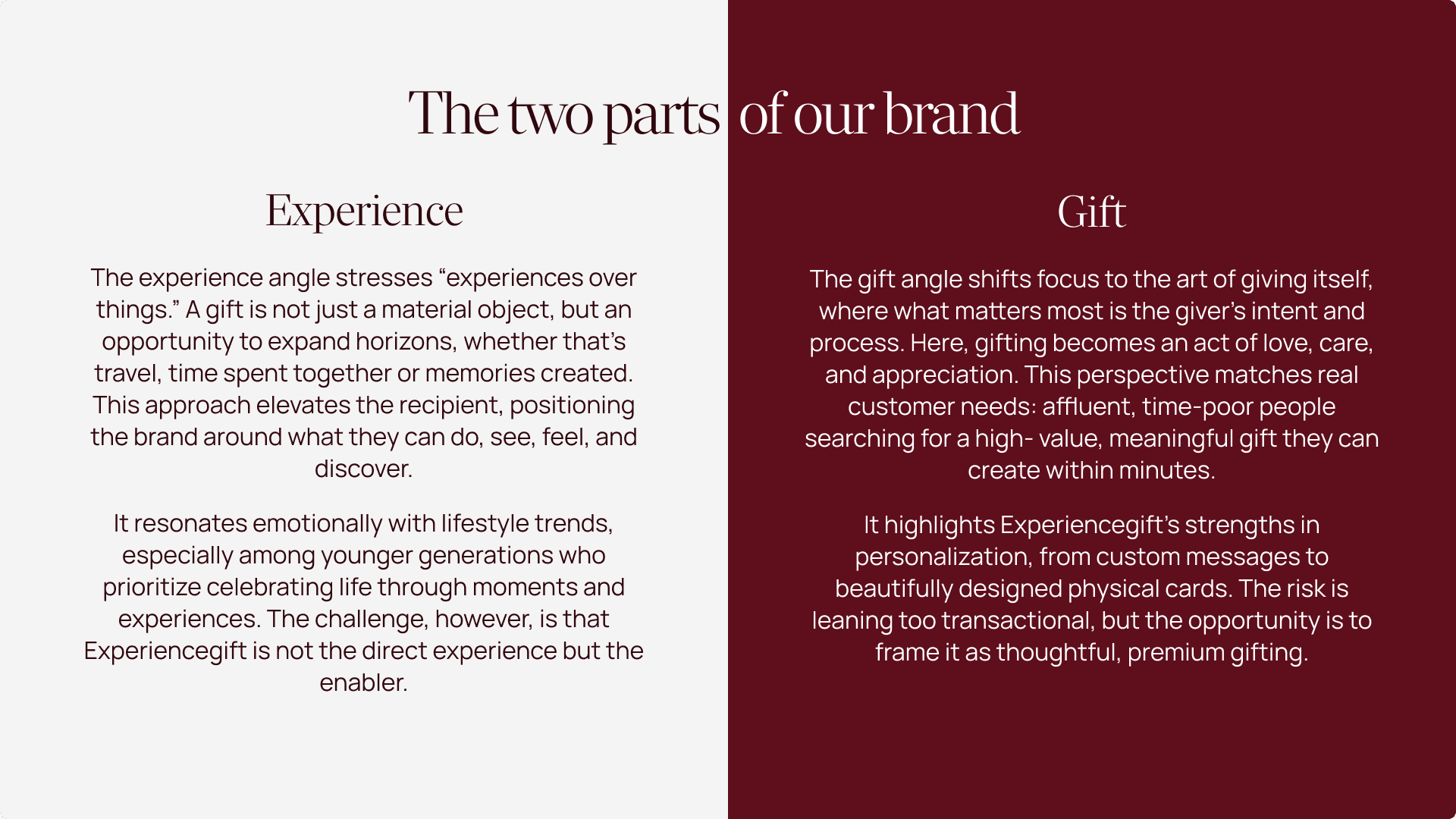
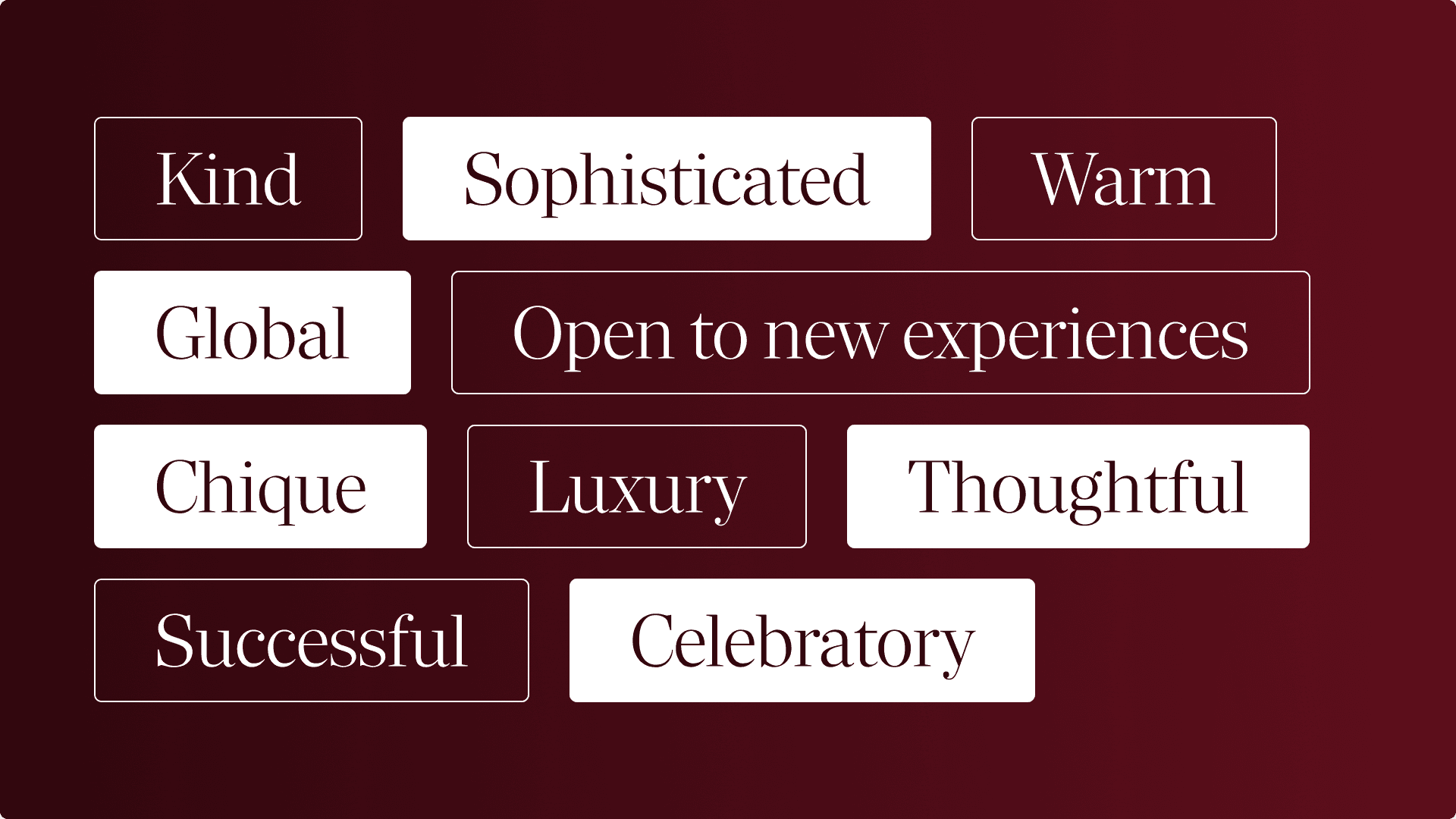
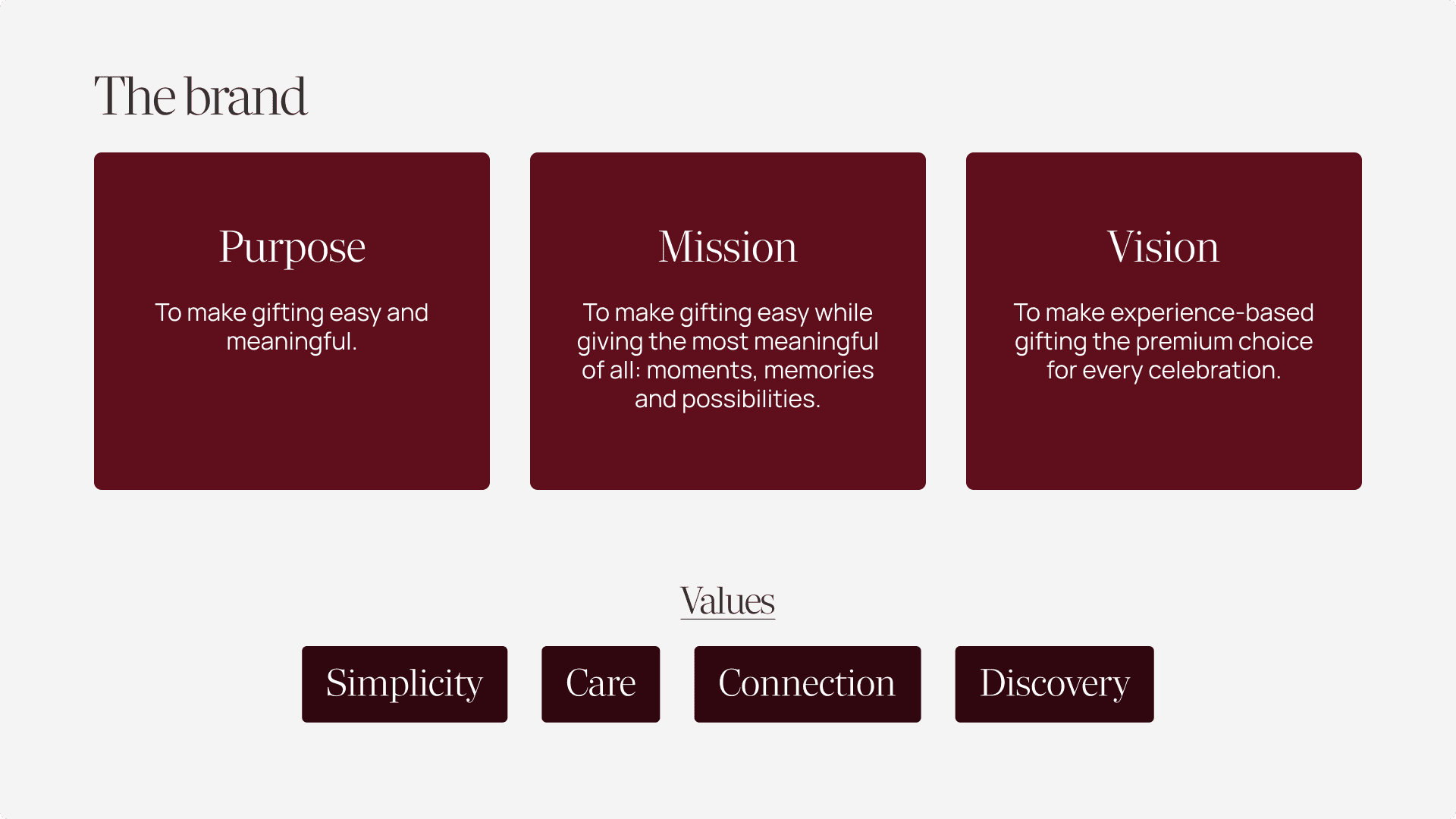
We collaborated with an external agency to define the brand strategy, messaging, and identity. Below is a selection of core elements from the strategy that informed the visual and product direction.


Phase II:
Early information architecture and wireframes
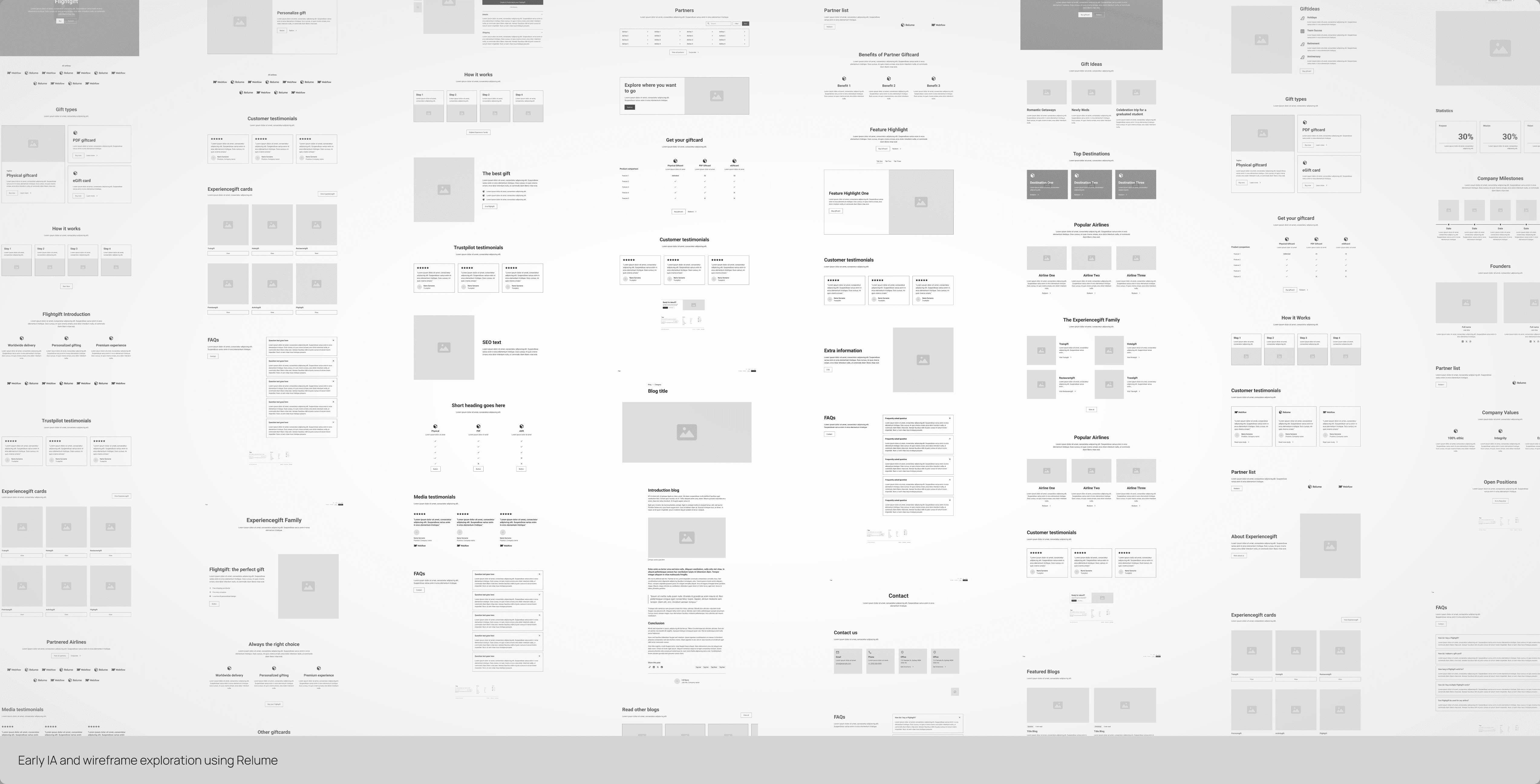
To define the information architecture across brands, we first mapped all existing content and identified what to keep, update, or add for SEO and clarity. Using Relume, we generated fast low-fidelity wireframes to explore layout options and validate structure before moving forward.
Phase III:
Multi-brand UI Kit
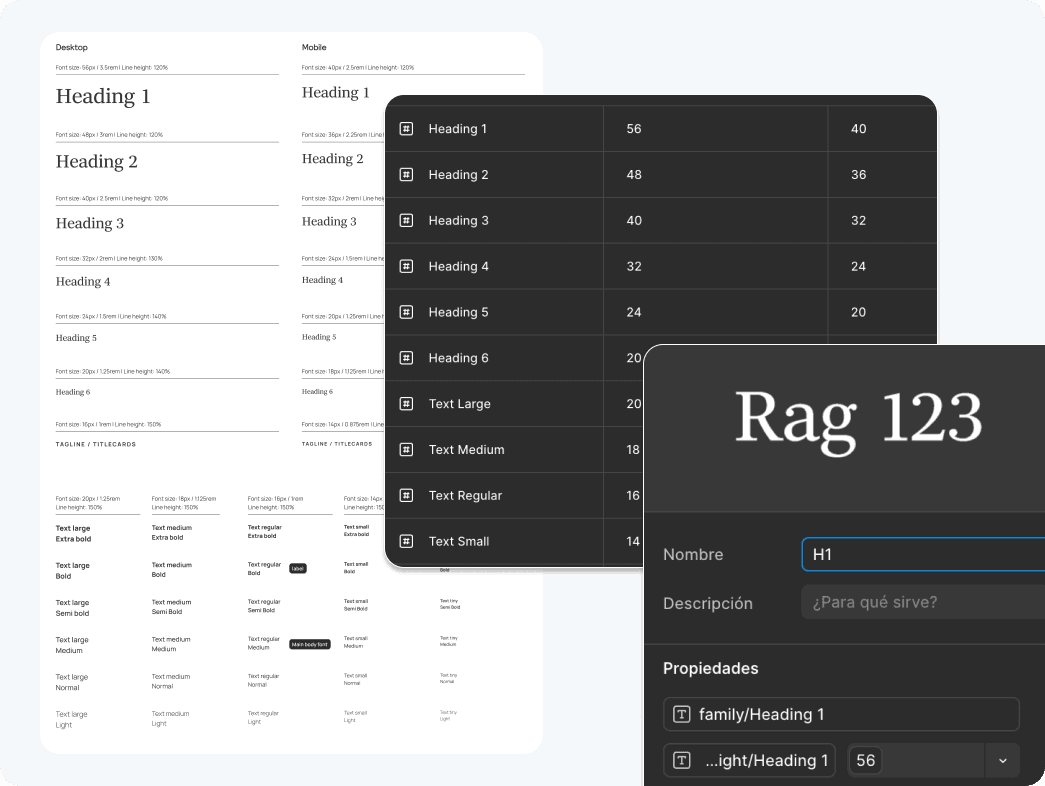
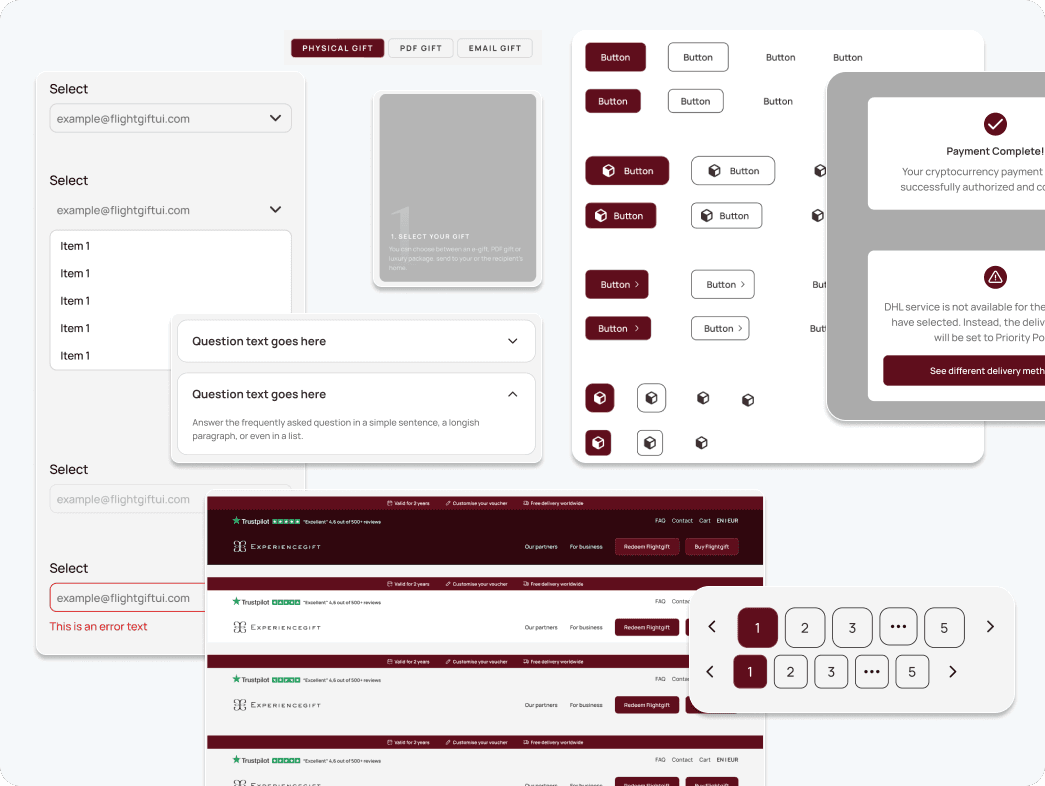
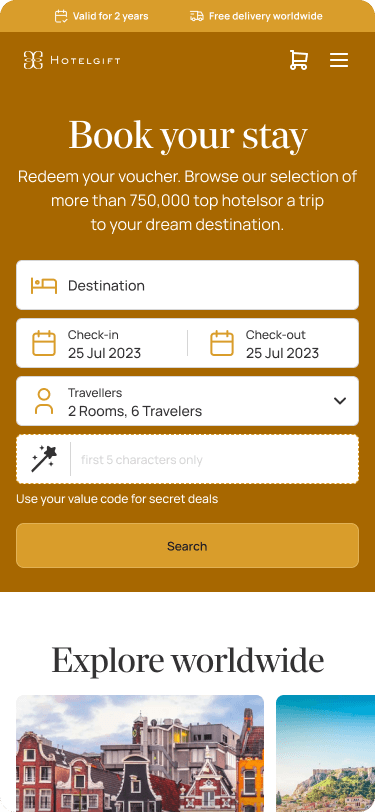
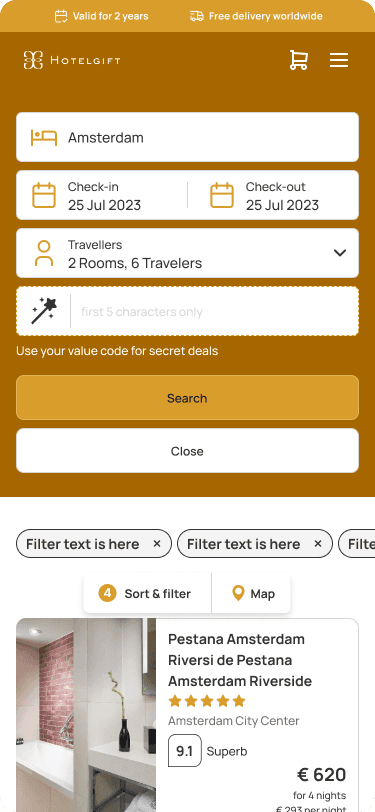
While the agency developed the core identity, I translated it into a lightweight but scalable UI kit that could work across all sub-brands.
This included:
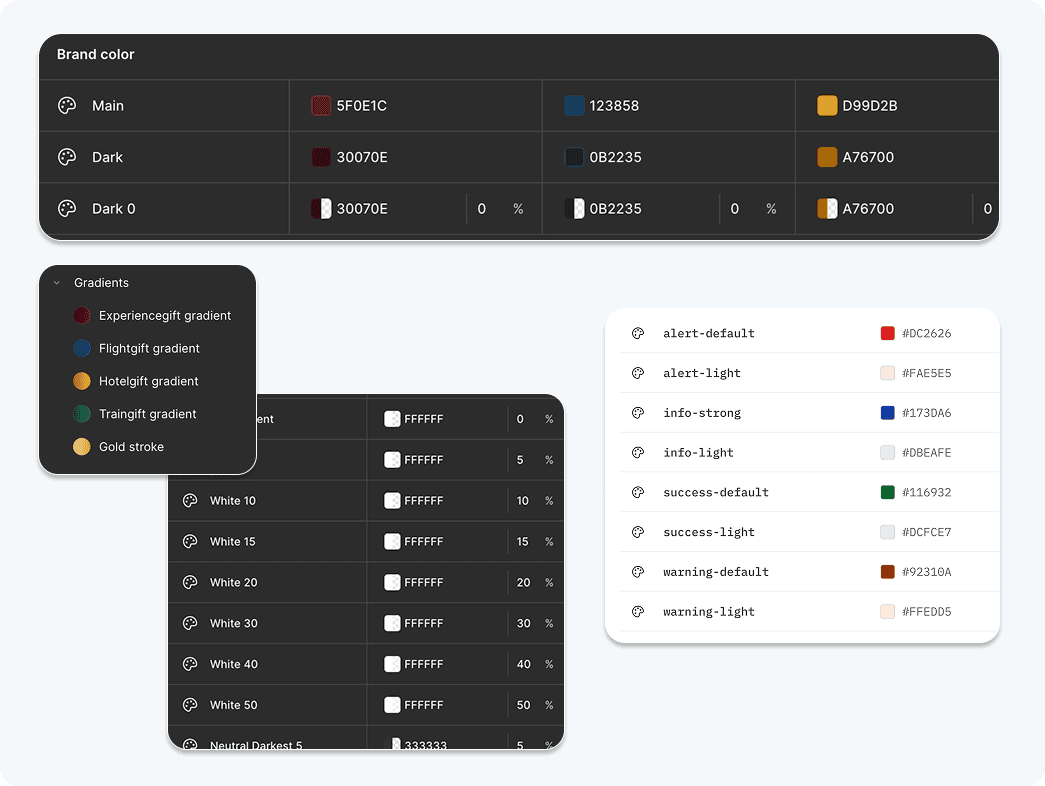
color modes aligned with each brand
typography frameworks
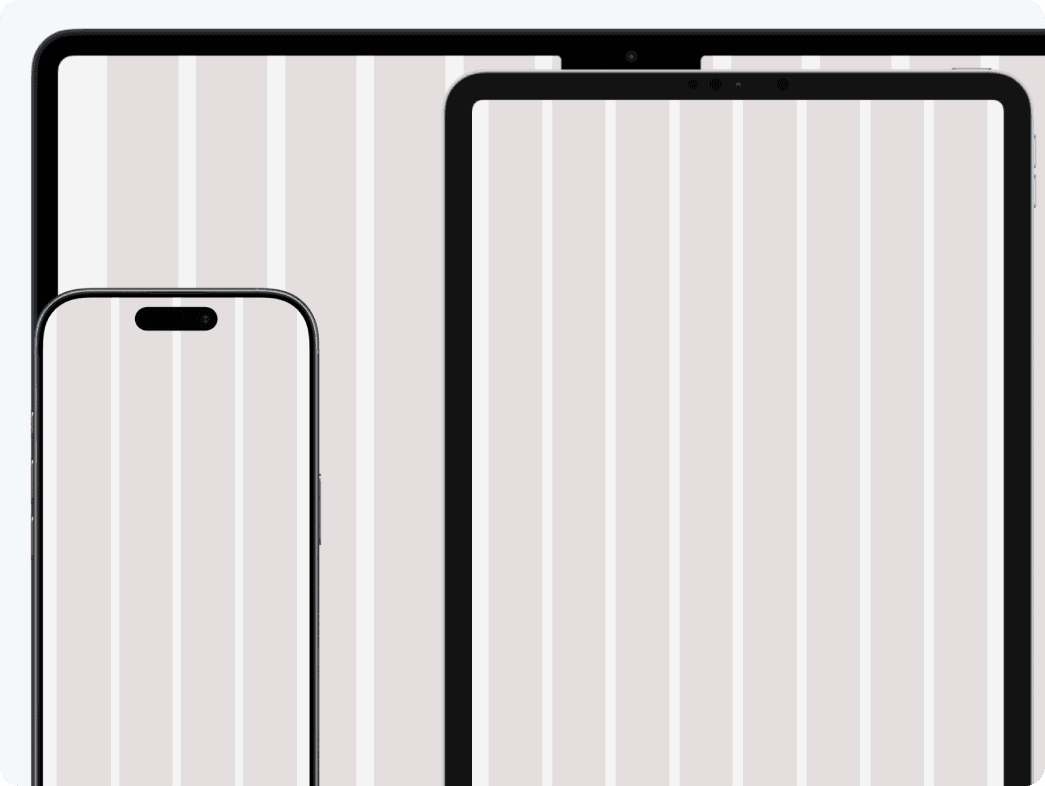
spacing + layout tokens for responsiveness
reusable components for desktop and mobile
adaptation of gift card visuals and assets across brands
The goal was to maintain consistency while enabling fast implementation with a single in-house designer responsible for ongoing maintenance.
Phase IV:
Design & development
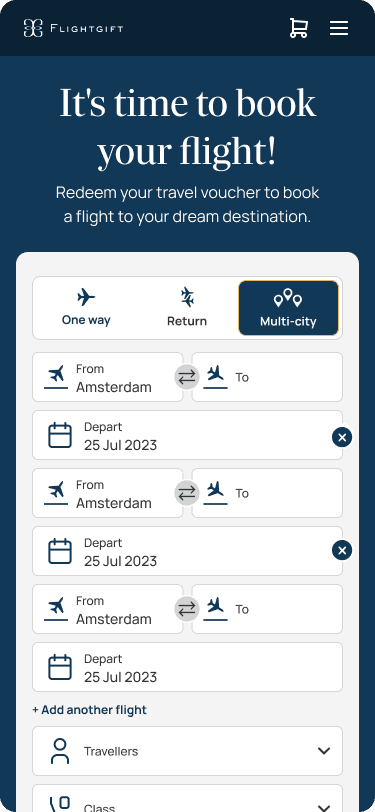
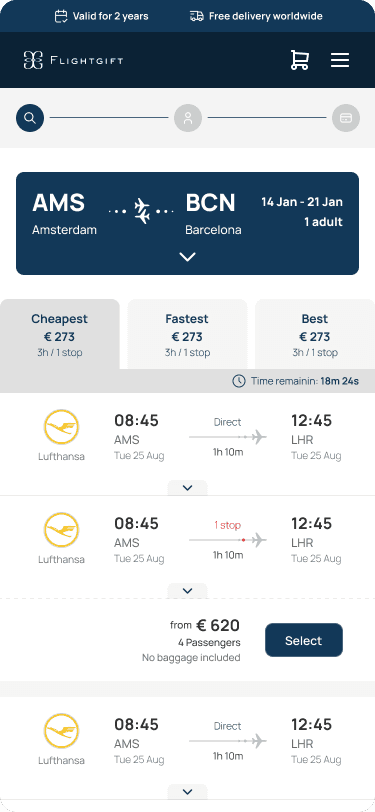
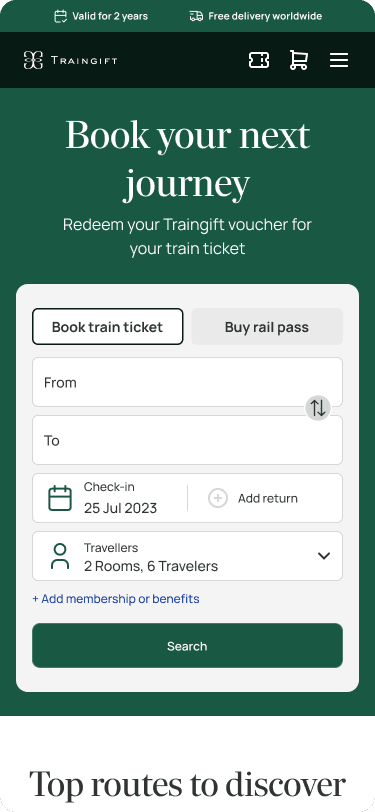
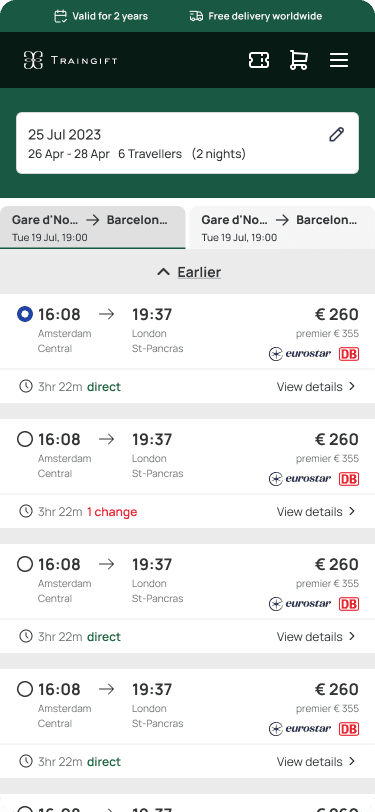
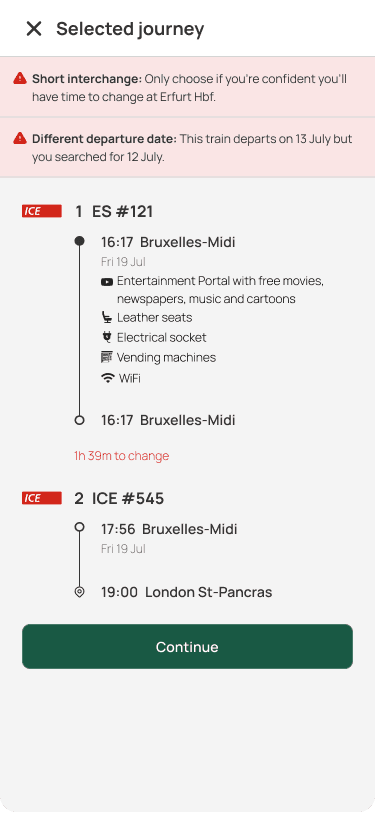
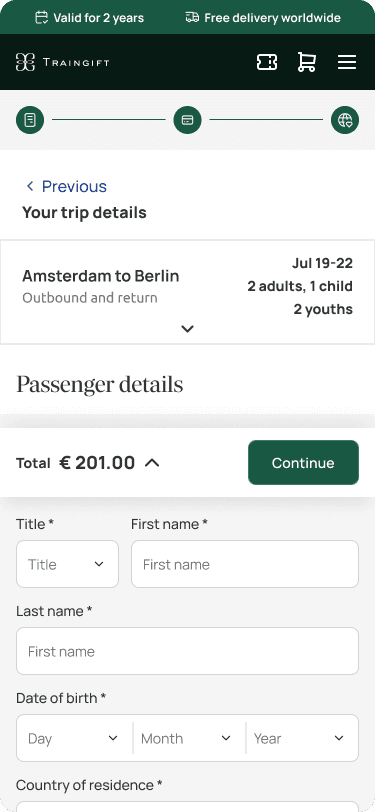
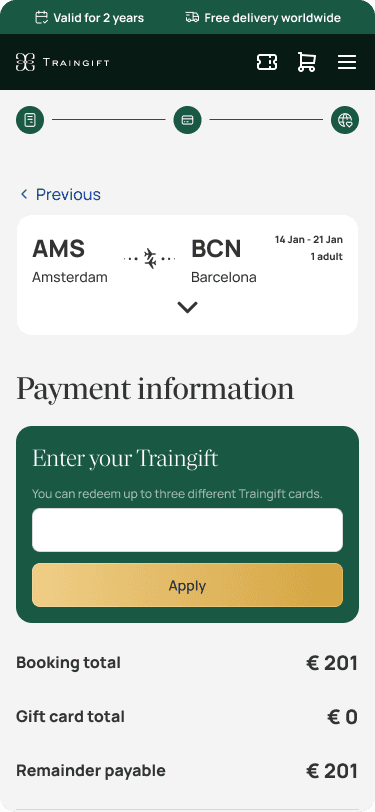
I collaborated closely with 3 front-end developers to bring the new identity into production across all websites. With a short implementation window, we worked in tight daily cycles: from design handoff and real-time adjustments to QA, visual polish, and small UX improvements identified during testing.
Homepage
Product page
Order page
Impact and learnings
Following the launch, sales grew by 20% compared to the same period last year, and the average gift card value increased. The new UI kit unified the look and feel across all brands, aligning typography, iconography, and component sizing, ensuring a consistent brand experience everywhere.
1.
Rebranding requires realistic timelines.
Delivering a multi-brand rebrand in under three months (right before peak season), meant the planning and coordination weren’t as smooth as they could have been and introduced unnecessary risk.
2.
With a small team and tight timelines, focusing on a UI kit allowed us to move fast and stay aligned.
For the first time, the company now has a structured UI kit to support future iterations and serve as the foundation for a scalable design system.